Showing posts with label Animals. Show all posts

Monday, February 23, 2015

On Hissy-Fitting and Lickety-Splitting


Great Big Baby Dog Woodrow, Old Lady Dog Callie, and I were lying on our bellies looking out my attic-bedroom window at 6:15 this morning.  Snuggling in bed with your dogs looking out the window together in the early morning is one of the great pleasures of life.  I commend it to you.

While we were gazing at the ice-covered woods, the dogs began throwing a hissy-fit.  If you are not from the American south, you may not know that a hissy-fit is a tantrum.

The Cambridge Dictionary defines hissy-fit as a sudden period of uncontrolled and silly anger like a child’s.  I do not think people from Cambridge throw hissy-fits. 

In addition, one does not HAVE a hissy-fit.  One THROWS a hissy-fit.  I do not know why.  

Perhaps it’s because throw is a strong verb.  A good hissy-fit is always thrown.  Most recently I threw a hissy-fit when I dropped my phone in the bath.

But back to the dogs’ hissy-fit.  They threw it because Young Red Fox was lickety-splitting down the cart path. 

The Oxford Dictionary defines lickety-split thus: as quickly as possible.  OD says lickety-split is an adverb, but I prefer it as a verb.  I know the word more intimately than the writers of OD do because I’ve been lickety-splitting all my life, and I doubt that anyone who ever worked on the Oxford Dictionary has ever lickety-splitted.  I can’t imagine a wizened don sitting in a dusty library telling another wizened don, “I need a definition of perspicacious lickety-split.”

Please note that I like verbing nouns, adjectives, and adverbs.  Lickety-splitting is a more powerful verb than running lickety-split.

Lest you wonder whether verbing is a verb, it is.  Antimeria/anthimeria is the act of changing one part of speech into another, such as verbing.    If you change the word, it’s a derivation.  If you don’t change the word, it’s a conversion or a zero derivation.

Lest you think this essay is pointless, let me assure you that I have a point: life is too short to throw hissy-fits by annoyances lickety-splitting through our lives.  Like other people’s antimeria:  Yesterday I was lickety-splitting past another white-haired woman who was throwing a hissy-fit about her daughter-in-law’s use of the word cocooning, as in, “We’re staying home cocooning this weekend.” 

I wanted to say, “Lady, at our age, life is too short for throwing hissy-fits.

“Instead, we should each go home and snuggle on our beds with our dogs and gaze into the snow-filled woods.” 

Dogs who get hissyfied by foxes lickety-splitting by.

Hissyfied?  One of my favorite antimeria is making predicate adjectives by adding fied to almost any part of speech.  So I hope you have been smartified today because I taught you about antimeria/anthimeria. 

And I hope you stop lickety-splitting for the rest of the day, get unhissyfied, and go snuggle with your dogs on your bed and stare out the window together. And thus be blessifed.


Thursday, December 11, 2014

The Circle of Life: The Red Fox


Until we moved to Arkansas, I only seen a red fox once.  He came through the back garden of the English cottage where I was staying. He was not the gorgeous fellow of fairy tales.  His hips, backbone, and ribs protruded.   Most of his hair had fallen out.  I tossed and turned all night.

I began studying about red foxes. I learned that December is the month when young females come into estrus and young males try to establish a territory where they can start a family.  I learned that red foxes live in Arkansas.  But I was living in a city in the Texas desert where no red fox had ever trod.

The first morning that I saw a red fox from my bedroom window here at my retirement home in Arkansas, I raced down the stairs to tell Husband Don.  Yes, I was sure.  A big, beautiful red fox.

My big red fox trotted by the house every morning about seven.  He stopped in the commons area behind the creek that borders our yard.  In the summer, I couldn’t see him through the trees, but when the leaves fell, I could watch him from my bedroom in the attic.

He would stand in the clearing and peer north and south, nose testing the wind.  Satisfied, he would head west.  The stuff of fairy tales.

Then, late last summer, I saw him lying in the middle of the road.  A turkey vulture was pulling his already-ravaged body into the gutter where it could feast safely.  It’s the circle of life, I said to myself.  It’s the circle of life.  But I grieved for weeks. 

Then, yesterday morning, Old Dog Callie woke me up when she leapt from my bed and began to bark and scratch at my bedroom windowsill.  Baby Dog Woodrow began barking and running in circles to help his sister, although he had no idea why she was excited. 

I looked out the window, but because of the quilt of red, gold, and brown leaves covering the ground, I couldn’t see anything.  Callie insisted that something was happening.  I let my focus go hazy and stayed alert for movement.  Then I saw it. In the trees, north of where Old Red Fox used to test the air, stood a young red fox.  He sniffed the air to the east and north for a minute and then headed west.  My heart thundered.

“It’s okay, Callie,” I said.  “He’s supposed to be here.” Yes, he’s supposed to be here.  I sat up on the side of the bed and thought, He’s the son of Old Red Fox.  He’s establishing his territory, filling the vacancy left by his father.  He’s looking for a vixen.   To mate.  To start a family.  It’s the Circle of Life.  The Circle of Life.

Old Dog Callie and Baby Dog Woodrow hopped up on the bed next to me.  I wrapped my arms around them both and hugged them close. 


Tuesday, November 25, 2014

The High Cost of Pet Ownership

Saturday, Baby-Dog Woodrow ate a bar of soap for $140.75.  The bar of soap: 75 cents. The vet bill: $140. 

Our Woodrow is going to recover completely, perhaps because my soap is ninety-nine and forty-four one-hundredths percent pure.  (If you are over 60, you know what brand my soap is.)

Because of his Saturday indiscretion, Woodrow vomited three times on Sunday, so I fed him small amounts of rice and rice-water throughout the day. I skipped church to take care of him.  He slept most of the day, wanted me close.  I stayed on the bed with him for hours, whispering “I love you,” reading, and watching John Wayne movies. 

Although he woke me with lively kisses before dawn this morning, we were sitting in the vet office by 9:00.  
Woodrow’s Great Soap Escapade started me thinking (once again) about how much money adequate pet care costs.  And about how many people who have pets can’t afford to have them. 

While I was in the vet’s office, I overheard the receptionist talking to a potential client.  The woman had a voucher to have her dog spayed, and she wanted to know how much money she would have to pay the vet if she used it.  The voucher paid $45 for the spay surgery.  The owner would have to pay $20 for pain medication and $15-18 for something else (I couldn’t hear what).  The owner said that she didn’t want to pay for the pain medication or the required something else. 
The receptionist explained that the vet would not perform a spay surgery without pain medication. 

“Thank God,” I thought, having had a hysterectomy myself. 
Not only did I think about the cost of dog ownership at that moment, but I spent fifteen seconds wondering whether a lady who didn’t want to provide pain medication for her post-hysterectomy dog should even own a dog.

Please understand.  I personally know many people who dearly love their pets but who cannot afford their care.  I once knew a double-amputee military veteran who deeply loved his dog and almost died of a broken heart when she died. She died because he could not afford her monthly heartworm preventative.  Perhaps if I had known it before her death, I could have located a veterans’ organization who would have helped.  I hope she was waiting for him when he finally reached Heaven’s gates, and with his legs restored, he could run with her through sunlit meadows.
The truth is ugly, but people who want to adopt a pet need to understand that the cost of the adoption is only the tiniest tip of the iceberg of years of significant financial commitment.  Anyone who carries a credit card balance can’t afford a pet.  Breaks my heart because disposable income should not be a condition of giving and receiving the love of a dog.  Or a cat.  But caring for a pet is expensive. 

Love ought to be enough.  But it isn’t.


Saturday, November 8, 2014

What My Plumbing Problems Reminded Me About What Dr. Helen Raschke Taught Me About Poverty


Our water got turned back on yesterday.  We’d sprung a geyser a week ago, so since then, we’ve only had water for 20 minutes a day, long enough to shower, brush, flush, and fill the bathtubs for future flushes.  We knew we needed new pipes, so after the third plumbing call in as many weeks, I bit the bullet.  We now have all new pipes ($3,904), and although the plumber is an affable fellow, I hope never to see his butt again.

Living without running water for a week made me think about what the late Dr. Helen Raschke taught me about poverty twenty years ago.

Before I met Dr. Raschke, I thought poverty was about having to make instead of buy Christmas presents.  I knew that public schools provided poor children free breakfast and lunch, that Medicaid paid their doctor bills, and that the government subsidized their housing.  I thought that covered everything. 

Boy, did Dr. Helen Raschke open my eyes.  A marriage and family therapist who was led by her profound Episcopal faith, she had established a free legal clinic to assist women in poverty.  She happened to be the wife of my Episcopal priest, Dr. Vern Raschke, which is how I came to know her.

Helen told me, “People who live in chronic poverty are not simply people who lack disposable income.  They are Multiple-Problem People.

 “Multiple-Problem People have physical and mental health problems.  They have employment problems, school problems, legal problems, marriage problems, and problems with their neighbors and families.  They are often illiterate and have learning problems. They lack adequate housing, transportation, child care and health care. 

“They get their water, electricity and gas cut off, and then they can’t afford the deposits to get them on again.  Without power, they can’t use the refrigerator, stove, or microwave, so they use their limited funds to buy junk and fast food until the money runs out.  When the water is cut off, they can’t shower, wash their hair, or even flush the toilet. Think about it.”  

She then explained about the inability to provide for basic needs like deodorant, soap and toothpaste.  And even sanitary napkins.

Then she switched to cultural disadvantages of Multiple Problem People.  “They don’t know things that you and I take for granted: They don’t know that dirty dishes attract vermin, that their child needs a regular bedtime routine, or that they’re never going to win the lottery.”

Then because she knew that I’m an animal lover, she added, “And they don’t know that the dog tied to the tree in the back yard needs fresh food and water every day, much less that he needs to be permanently unchained and running free in a fenced yard, or that he needs shelter, regular veterinary care, and companionship.”

Then she began to explain how the problems interacted to create new problems: For example, if a mother had neither dependable transportation nor a strong social network, those two problems interacted with each other so that she couldn’t even go pick up a bottle of diarrhea medicine for a sick child, who then became sicker and therefore missed a week of school, which convinced the teacher that he was irresponsible, which...

So here am I today taking my running water for granted.  This morning, I washed a week’s worth of clothes and ran the dishwasher.  This afternoon, I relished my shower.  Washing my hair was darn near erotic.  I even gave new puppy Woodrow a warm bath.  And I shouted, “Yee-ha!” when I flushed the toilet. 

All those things I take for granted.  All those things I forget that poor people don’t.  So tonight, this is my prayer:

Oh God who created and then parted the waters, this night provide water for thy children who have none.  Bring thy rains so that the dying dog who is chained to a tree might have a sip to quench his thirst.  This I ask Thee, Lord, in the name of Thy Son who walked upon the water and who turned water into wine.

Amen.


Tuesday, October 28, 2014

Worms, Dogs, and Little Children


On Monday, our new puppy, Laird Woodrow the Wirehaired, was the unwilling recipient of his shots and worming treatment. 
Today on one of his half-dozen walks, he pooped out a half-dozen live worms.  I pointed them out to Husband Don.  “Those things were inside Woodrow?” he cried.
I dutifully picked up the wriggling pile of dog poop in my trademark blue bag and carried it home to the trash.

As I was thinking how the worms were stealing the nutrients in the Blue Buffalo® we have been feeding our baby dog-person, I started thinking about the baby human-persons around the world who are infected with worms, so I started reading. 

I learned that parasitic worms are call helminths.
I learned that more than a billion people worldwide are infected with soil-transmitted helminths due to inadequate sanitation.  A billion. 

If you can’t get your heart wrapped around a billion people suffering from worms, try this:  A person is suffering from nausea, dysentery, intestinal obstruction, rectal prolapse, anemia, weakness, lethargy.  And it’s happening a billion times right now. 

Or try to wrap your heart around this: 1 of every 7 humans suffers from worms.
The World Health Organization says that worldwide, 880 million children need treatment for debilitating worms at this moment.  And the brains of those children cannot develop properly when they are so ill.

Worms burrow into children’s feet from the soil or skin from infected water.  They invade through the bite of a black fly or a mosquito or through eating infected meat or vegetables.

I’m not saying all worms are bad.  In fact, worms have been found to produce positive benefits for some people in some small clinical trials that must be replicated.  Dr. Eric Hollander of the Albert Einstein College of Medicine has collected data that suggest that ingesting whipworm eggs may reduce repetitive behaviors in some people on the autism spectrum.  His treatment is based on the Hygiene Hypothesis that posits we live in such a sterile environment that we’ve developed autoimmune disorders that are less common in third-world countries. 
I get that.  All Earthlings evolved together.  Some of us are parasites on others of us.  I am a parasite on the animals I eat.  Mosquitoes are parasites on me, but I get to continue living.  Some of us Earthlings have symbiotic relationships.  Like Baby Woodrow and me.
I don’t know what would happen if all the worms in the world died off, but I suspect we’d all be dead in a matter of weeks.  So I’m not saying that worms are bad.  I’m simply saying that my dog had parasites in his belly, and those parasites would have made him sick, perhaps killed him in time.
And I am saying that a billion people in the world likewise have worms that make them sick.  And that 880 million of those people are little children.
I don’t shop at Christmas.  Instead, I donate to charities that serve the devastating numbers of animals in desperate need.  But perhaps this year I will write an extra check- not in lieu of, but in addition to my usual donations- to a charity that could rid a little girl in Liberia of the worms that this moment are causing her to vomit her guts out, or a tiny boy who will die because his bowel is blocked with a pile of wiggling worms like my Woodrow passed today.  Because no child should have to suffer with a disease that I cured my dog from for less than the cost of going out for pizza and beer.

Saturday, October 25, 2014

On Loss and Gain: Shelter Dogs and Life Changes

Two days ago when we adopted our new dog, Laird Woodrow the Wirehaired of the House of Gore-Lancaster, I did something that gave me pause at first, but in retrospect, I know was right.

Woodrow, then called Jack, shared a cage with a female named Allie; she seemed a couple of years older than he.  They had wire-haired-ish faces, but different coloration and body builds.  She was snow white with a large brown patch; he was retriever gold with an eggshell muzzle.  She was taller and leaner, her face pointier, her mustache more pronounced. He loved people; she didn’t approach.

On the day we adopted him, the shelter attendant had to drag Woodrow-To-Be outside to meet us.  Long strings of fear-saliva flung from his whiskers, and he flattened himself on the walkway as she dragged him. I’ve seen roadkill less pancaked. “Sorry,” the attendant said.  “He’s not leash trained.”

I said, “He’s probably scared without his cage-mate.”

“Oh,” she said, “That’s his sister.” 

Whoa. “I didn’t know that,” I said.  “Petfinder doesn’t say they are pair-bonded.  I don’t want to break them up, and we can’t take them both. So we better not take him.”

“That’s the problem,” said the lovely young attendant, “People say exactly what you said; everybody thinks they’re cute, but nobody wants to separate them, so they don’t get adopted.”

“I understand that.”

“But the bigger problem is that they’ve been here over three weeks.  The shelter director has passed them over for euthanasia twice.  They’ll both have to be put down soon.”

“Oh.”

“If you take Jack, Allie has a much better chance of getting adopted.  If you take him, she might be saved, too.”

Oh, I thought.  If they stay together, they’ll almost certainly both be euthanized.  If I take him, he’ll be saved, and she might be euthanized.  But she might not.  At least she’ll have a shot at being adopted.  We might save both dogs by taking one.

Meanwhile, Woodrow cowered in front of us.  But our dog Callie liked him immediately; she play bowed.  That was the first criterion: Callie had to like him. Tenderhearted Husband Don liked him, too.  That wasn’t much of a hurdle because Don’s a softie for dogs.  Dad commended Woodrow as a charming fellow, so the deal was done.  Dog Pound Jack was to become our Woodrow.  Allie would lose her brother, but because of her loss, she would have a real shot at being adopted, too.

The Jack/Allie Catch 22 has led me to think about the need for sometimes letting go of people, things, and old roles in order to embrace new joys that life has to offer. You see, two objects cannot exist in the same space at the same time. And once a space is made available, something must fill it up. Because Nature abhors a vacuum. That’s physics.  And metaphysics.

This year, I’ve had to let go of my role as a college professor.  Sometimes it’s been a struggle.  But making that space has allowed me to regain a role I had to sacrifice long ago: now, in the autumn of my life, I can once again say, I am a musician. 

This year I watched a widow let go of her grief and become a beaming young lover once again.

I watched a shy, friendless old woman let go of her solitary life and move into assisted living where she has learned how much fun sharing a meal with new friends can be.

I watched a man let go of a home he could no longer care for and thereby find that freedom from homeownership pulses with possibility.

So losing something offers the possibility of filling the vacuum with something new, and perhaps in its own way, better.

So this is my prayer for Allie, whose brother I took from her yesterday.

Creator God, to save our Woodrow, I have forced dear Allie to give up her brother.  I beg that Thou wilt transform her loss into gain; I beseech Thee to send her a person who will shower her with the love that we pledge to shower upon her brother.  And Lord, I beseech Thee to embrace with Thy peace all the dear shelter dogs who this day must die because they have no one to love them.

Amen.    


Friday, October 24, 2014

The Transformation of a Shelter Dog: Laird Woodrow the Wirehaired of the House of Gore-Lancaster

Until yesterday,                        23 October 2014, at 3:00 p.m. CST, this was Jack, an innocent dog-person condemned to die through the fault of irresponsible human-persons: first and foremost, the human-person who owned Jack's mother and failed to spay her; second, the human-person who owned Jack's father and failed to neuter him; third, the human-person who abandoned him.  These perpetrators may have been  three separate irresponsible human-persons, or they may have been one human-person whose crimes of irresponsibility are manifold. Shame on the guilty for bringing more unwanted dog-babies into the world when 6.3 innocent dog-babies are already born for every innocent human-baby. 

However, yesterday at 3:01 p.m. CST, Jack's fate was transformed by the magic of love: Jack the Condemned to Die Through No Fault of His Own became Laird Woodrow the Wirehaired of the House of Gore-Lancaster.  This transformation required only a few swipes of the pen, $55, and a lifetime commitment of love, time and money from the whole fam-damily. 

Our Woodrow will be a dog-person adored from this day forward, although his adopted sister, Lady Callie (now 70+ in dog years), will see that he remains Second Dog while she remains Top Dog.

But appearances are often deceiving, and magic often produces results other than what we intended.  So here's the story.

Woodrow had sat on death row for more than three weeks; his cuteness factor gave him extra time while his kennel mates met their untimely ends.  His bio on Petfinder.com said he was an adult, and I'd been laboring under that misconception for two weeks. Yesterday, however, the shelter employee said he was six to eight months old, so I thought, O.....kay. Well, he's pretty close to full size.  But the vet told me three minutes ago that he is only four months old and is going to get twice as big.  He's gonna be a bonny, strapping boy.  Not exactly what I had in mind, but apparently what God did.  "Ha HA!" said God.  Who happens to be the Ultimate Magician.
 
So Laird Woodrow the Wirehaired, my 30-pound dog-person, will become my 60-pound dog-person.  But that's okay.  Twice as much dog for the money. Twice as much magic.  Twice as much love.  Darn good deal if you ask me. 

Monday, September 29, 2014

Everyday Miracles: Toast-Stealing Dogs, Dancing Leaves, and Spider Silk


This morning a dog stole my toast.  Actually, the dog was mine.   Because she was sitting on the bed when I crawled in with my breakfast tray, and because I set the tray down and held my plate in my hand in front of me but was looking behind me while I was scooting backward against the headboard, and because she was sitting directly in front of me, she thought I was offering it to her.

She was delighted to be offered a piece of buttered toast (imported Irish butter, no less), and took it.  I turned around to see her sitting stock-still on the bed in front of me with a whole piece of toast in her mouth. 

What a delightful surprise!  A day when a dog unintentionally steals your toast is a harbinger for miraculous, magical things to come.

My friend, Jessica Dunn, is less than half my age but far wiser than I. She has an old soul.  Last year she told me, “You have the gift of miracles.”

“Huh?” I said.  “I can’t do any miracles.  Oh, I can make a fine pot of Chicken and Dumplings, but that’s where my miracle-making ends.”

She smiled.  “You have the gift of miracles because you see them all around you in the little things in life.  Few people realize they're seeing miracles every day, but you do.”

Oh.  If that’s the gift of miracles, I guess I have it.  So I knew that if my dog stole my Irish-buttered toast, I should encounter at least one more miracle today.  And within the hour, I did.

Husband Don, toast-stealing dog Callie, and I took a walk.  We’d gone only fifty feet when I saw a sweet gum leaf hovering in the air about five feet from the ground.  It tumbled and twirled and danced.   It careened out and flew back, but it stayed hovering in the air.  It knew we were watching, so it showed off.

“Hey, Don,” I said.  “Look at the leaf!  It’s a miracle!” We stood quietly to watch it. 

“It’s stuck on a spider-web strand,” he said. 

“I know!” I said.  “And isn’t it miraculous that it is?  And aren’t spider webs miraculous?”

“I guess,” he said.  “What are they made of? And how do spiders make them?”  (He had a lousy fourth-grade science teacher.)

“Spider silk.  They make it from a gland in their bodies. Once for ounce, it’s five times stronger than steel. NASA studies it for spaceships.”  I’m afraid of spiders, but their architectural acumen and artistry delight and amaze me. 

So today was a day of little miracles, and for that, I offer this prayer.

Thanks God, for everyday miracles.  Thanks for a dog who unintentionally steals my toast, a sweet gum leaf who dances in the air, and the architectural marvels constructed by a fellow earthling with a brain the size of a grain of sand.  Miraculous, magical world. Thanks, miraculous, magical God.

Sunday, September 14, 2014

Tales from a Spay and Neuter Clinic: An Overview


Tales from a Spay and Neuter Clinic: An Overview

Arkansans love animals.  Arkansas is #1 in dog ownership in the nation, #7 in pet ownership.  Unfortunately, it’s also 48th in median family income. 
People in the hills of west-central Arkansas are the folks we serve in our mobile spay and neuter clinics.  Good, honest, hardworking people.  Help their neighbors.  Many were not able to finish high school.  Many are functionally illiterate. Many are disabled.  They live in poverty.  But they try to help animals.


These good people can barely feed themselves, but they give of what little they have to care for the endless stream of injured, frightened, abandoned puppies and dogs who collapse on the roadside after they've been thrown out of a moving car on the county road. Or abandoned by a desperate neighbor who moved away. 

They bring freezing kitties out of the winter night, kitties who are trying to warm themselves on a car engine, or who come to their doors anemic from ticks and fleas.

They feed colonies of skinny feral cats and watch helplessly as they multiply exponentially. 

These are the people and animals the Hot Springs Village Animal Welfare League Spay and Neuter Clinics help.  Not the middle-class people of Hot Springs Village; the people in the poverty-stricken areas around it.

The League offers four 2-day mobile spay and neuter clinics a year in Mountain Pine, Fountain Lake, Crows, and Jessieville.  Jessieville’s not on the census.  Crows isn’t even on the map.  But people live there.

The League contracts with Arkansans for Animals, a nonprofit that runs a mobile clinic and keeps it staffed with a vet and two assistants. But a hundred volunteers are needed to make each two-day clinic run smoothly.

League members post signs advertising the clinic, but word of mouth from former clients is the most powerful advertisement.  People call their neighbors, go tell their friends who are sitting on their porches, knock on doors of folks who don’t get out much.

Then, the first day of the clinic, people start coming.  The return clients are confident and excited.  The new clients are tenuous, anxious.  But down the road they come, leading big and little dogs of every ilk: shepherd mixes, pit mixes, small purebreds dumped by puppy millers, whole litters of half-grown pups.  From their battered old cars, they unload crates full of the community cats and kittens they feed. 

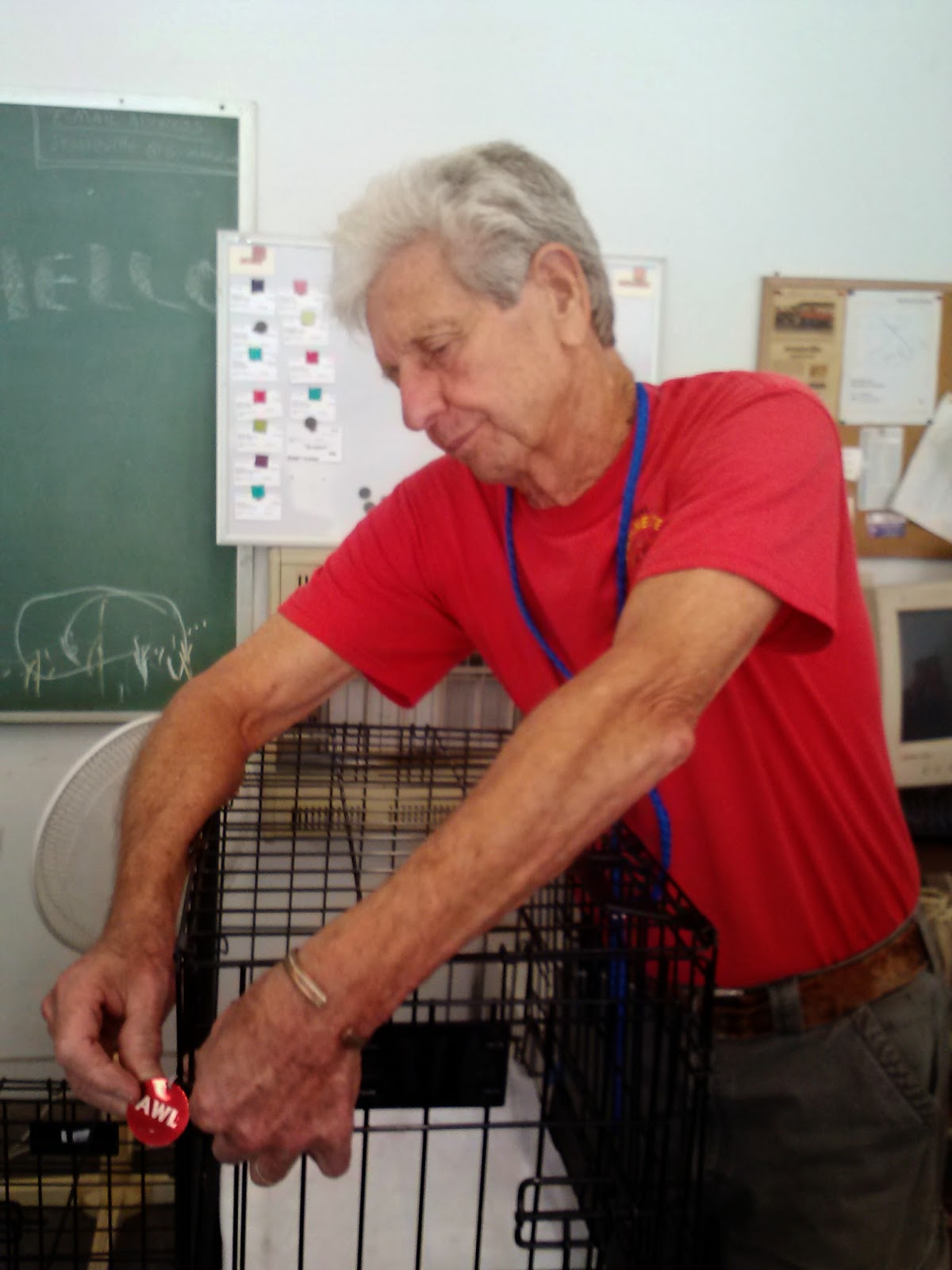
Red-shirted volunteers go into action.  They complete paperwork and process whatever fee the clients can pay.  Other volunteers crate the animals and comfort the frightened ones. 

More volunteers schedule the order of surgeries and carry the animals to and from the mobile operating room.

When the volunteer cooks arrive with food and water at noon, those on the front line grab a sandwich and a drink on the fly.

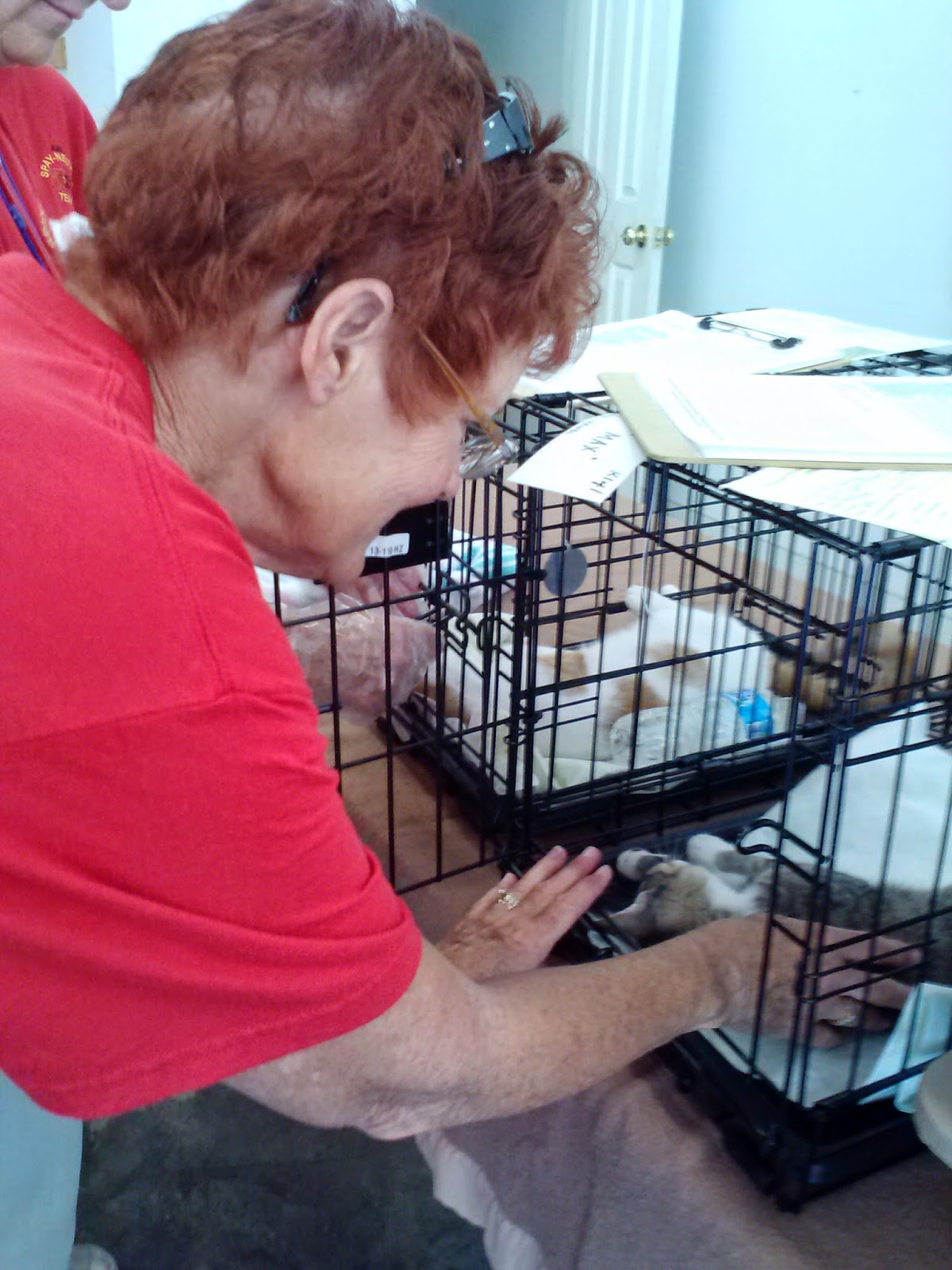
Good Samaritans stay one-on-one with animals as they begin to recover from surgery, talking to them, stroking them, reassuring them.  Owners who arrive early are allowed in the recovery area to comfort their animal family member.  Volunteers give pedicures to sleeping animals who need them, check them for fleas and ticks.

Nurses and a retired vet check every animal and stay close to those having cardiac or breathing problems.  Experienced volunteers massage and talk to animals having difficulty awakening.

Owners receive education and counseling as they arrive to claim their dogs and cats.  They receive gifts of food and other pet supplies.  They thank the volunteers over and over.  “You don’t know how important this clinic is,” they say as they gather their beloved animal companion to head home.  "You don't know how much this community needs you. You make such a difference in our lives.  We don't know what we'd do without your help. We don't know what our animals would do." 


Saturday, September 13, 2014

Spay and Neuter Clinic Tales: Who, What, Where, How, and Why


Spay and Neuter Clinic Tales: Who, What, Where, How, and Why

Hot Springs Village Animal Welfare League doesn’t need to provide spay and neuter services for Hot Springs Villagers.  The Village is a gated community of retired middle-class people (mean income $51,502) who pamper their companion animals. 

When Villagers die or must move into nursing homes, The League steps in to help rehome beloved animal companions.  The League provides world-class care for animals who wander into the village as strays or are dumped off here in the middle of the night, sometimes injured or ill, and that happens more than you might think.  The League manages a no-kill shelter with six runs, a beautiful play yard, and plenty of volunteers.  A strong foster program is a mainstay of The League, and the foster families helped The League adopt out 301 animals in 2013. 

What makes The League unique is that they focus on providing spay and neuter (S/N) mobile clinics for their good but poverty-stricken (approximately $13,000/year) neighbors who live in rural areas surrounding The Village.  These good people rescue stray and abandoned animals, but they cannot afford to take the animals to veterinarians to have them spayed and neutered.  The people pay the clinic what they can afford, but they can’t afford much.

Let me say that again: The League does not provide S/N clinics for The Village; they provide desperately-needed services for their non-Village neighbors who cannot afford to spay and neuter their rescued cats and dogs.

Yesterday I drove around one of the stunningly-poor unincorporated towns where a two-day clinic would begin today at the fire station.  The town isn’t even on the census.  The world has forgotten it.  Even the stop signs are faded to white.


As I drove through the run-down, unpainted houses and the trailers with tape across the cracked windows, I waved to people sitting on their porches. A lot of people were sitting on their porches because nobody can afford air conditioners.  The 90 degree heat outside was cooler than the 110 degree heat inside.  But despite the oppressing heat, everyone I waved to waved back. 

Many of the dogs in this hamlet live in desperate situations. My heart broke when I saw this heavy-coated husky mix chained to a tree with only rocks and dirt for comfort.  Panting, he had plastered himself against the side of his owner’s mobile home trying to feel the little coolness that might remain in the corrugated tin.  Today the heat will get to 90.  He probably won’t die, but he might wish he could.  When I saw the BEWARE OF THE DOG sign on the tree to which he was chained, I started to cry.  The sign should have said BEWARE OF PEOPLE. 


But most of these desperately poor people love their dogs and cats and want to take good care of them.  I passed a young woman who was carrying a small Sheltie, pushing her baby in a carriage, leading a Westie, and ushering along her other two little girls.  I stopped and asked whether she was headed to the clinic.  She said she was.  I asked whether I could take her picture.  She said I could. 
 

I explained that since Bob Barker died and the board closed his foundation, we had lost a significant part of our S/N funding, and I was trying to write grants to help continue the clinics.  She said, “Thank you so much. I can’t afford to take these dogs to the vet.  I rescued them this week from a lady who had rescued them from a puppy mill.  They stunk and were covered in ticks that took me all evening to pick off after I bathed them.  So now I have to get them fixed so they don’t have any more babies.  I think this one’s already pregnant,” she said, nodding at the one she was carrying.


Then she said, “I don’t know what would happen to the dogs here if you had to stop doing this clinic.  Thank you so much.  It’s really important.  We need so much help… You don’t even know…” 

She’s the kind of good folks that The League is trying to help.  But we need money to carry on the work.

After I left her walking down the road, I went to the clinic to see what I could see.  The dogs were all ages and sizes, from a big, grown blue-eyed husky, to a nervous adult Chihuahua, to a frightened puppy, to a rambunctious bunch of year-old mixes of all colors and coats with one blue and one brown eye.  I figured the husky was the source of all those youngsters and countless more.


My heart filled with pride as I watched our President Mary, a former nurse, listen to an unconscious kitty’s heartbeat; our Spay and Neuter Coordinator, Angela, comfort a kitty who was trying to awaken from the anesthesia; and a man I never saw before tag a cage for the next patient.


These wonderful people (and 96 more) could have been home savoring a second cup of coffee over a good book, playing a round of golf, or sleeping in.  Instead, they were helping animals in need.  Not their own animals, but the animals of a community who lacked the money- and often education- to take care of the needs of its own dear dogs and cats.

But volunteers can’t pick up scalpels and operate on dogs and cats.  They can’t perform spay and neuter surgeries.  For that we need vets, mobile clinics who will come to these poverty-ridden locations and provide the services that the animals so desperately need.  For that, The League needs money: $5000 for each two-day spay and neuter clinic so young ladies who try to rescue neglected dogs can walk down the road to get help for them.  So big blue-eyed huskies can stop multiplying endlessly.  So maybe, just maybe, dogs chained to trees in the searing heat under signs that scream BEWARE OF THE DOG will become only a distant memory.