Showing posts with label Cats. Show all posts

Tuesday, November 25, 2014

The High Cost of Pet Ownership

Saturday, Baby-Dog Woodrow ate a bar of soap for $140.75.  The bar of soap: 75 cents. The vet bill: $140. 

Our Woodrow is going to recover completely, perhaps because my soap is ninety-nine and forty-four one-hundredths percent pure.  (If you are over 60, you know what brand my soap is.)

Because of his Saturday indiscretion, Woodrow vomited three times on Sunday, so I fed him small amounts of rice and rice-water throughout the day. I skipped church to take care of him.  He slept most of the day, wanted me close.  I stayed on the bed with him for hours, whispering “I love you,” reading, and watching John Wayne movies. 

Although he woke me with lively kisses before dawn this morning, we were sitting in the vet office by 9:00.  
Woodrow’s Great Soap Escapade started me thinking (once again) about how much money adequate pet care costs.  And about how many people who have pets can’t afford to have them. 

While I was in the vet’s office, I overheard the receptionist talking to a potential client.  The woman had a voucher to have her dog spayed, and she wanted to know how much money she would have to pay the vet if she used it.  The voucher paid $45 for the spay surgery.  The owner would have to pay $20 for pain medication and $15-18 for something else (I couldn’t hear what).  The owner said that she didn’t want to pay for the pain medication or the required something else. 
The receptionist explained that the vet would not perform a spay surgery without pain medication. 

“Thank God,” I thought, having had a hysterectomy myself. 
Not only did I think about the cost of dog ownership at that moment, but I spent fifteen seconds wondering whether a lady who didn’t want to provide pain medication for her post-hysterectomy dog should even own a dog.

Please understand.  I personally know many people who dearly love their pets but who cannot afford their care.  I once knew a double-amputee military veteran who deeply loved his dog and almost died of a broken heart when she died. She died because he could not afford her monthly heartworm preventative.  Perhaps if I had known it before her death, I could have located a veterans’ organization who would have helped.  I hope she was waiting for him when he finally reached Heaven’s gates, and with his legs restored, he could run with her through sunlit meadows.
The truth is ugly, but people who want to adopt a pet need to understand that the cost of the adoption is only the tiniest tip of the iceberg of years of significant financial commitment.  Anyone who carries a credit card balance can’t afford a pet.  Breaks my heart because disposable income should not be a condition of giving and receiving the love of a dog.  Or a cat.  But caring for a pet is expensive. 

Love ought to be enough.  But it isn’t.


Sunday, September 14, 2014

Tales from a Spay and Neuter Clinic: An Overview


Tales from a Spay and Neuter Clinic: An Overview

Arkansans love animals.  Arkansas is #1 in dog ownership in the nation, #7 in pet ownership.  Unfortunately, it’s also 48th in median family income. 
People in the hills of west-central Arkansas are the folks we serve in our mobile spay and neuter clinics.  Good, honest, hardworking people.  Help their neighbors.  Many were not able to finish high school.  Many are functionally illiterate. Many are disabled.  They live in poverty.  But they try to help animals.


These good people can barely feed themselves, but they give of what little they have to care for the endless stream of injured, frightened, abandoned puppies and dogs who collapse on the roadside after they've been thrown out of a moving car on the county road. Or abandoned by a desperate neighbor who moved away. 

They bring freezing kitties out of the winter night, kitties who are trying to warm themselves on a car engine, or who come to their doors anemic from ticks and fleas.

They feed colonies of skinny feral cats and watch helplessly as they multiply exponentially. 

These are the people and animals the Hot Springs Village Animal Welfare League Spay and Neuter Clinics help.  Not the middle-class people of Hot Springs Village; the people in the poverty-stricken areas around it.

The League offers four 2-day mobile spay and neuter clinics a year in Mountain Pine, Fountain Lake, Crows, and Jessieville.  Jessieville’s not on the census.  Crows isn’t even on the map.  But people live there.

The League contracts with Arkansans for Animals, a nonprofit that runs a mobile clinic and keeps it staffed with a vet and two assistants. But a hundred volunteers are needed to make each two-day clinic run smoothly.

League members post signs advertising the clinic, but word of mouth from former clients is the most powerful advertisement.  People call their neighbors, go tell their friends who are sitting on their porches, knock on doors of folks who don’t get out much.

Then, the first day of the clinic, people start coming.  The return clients are confident and excited.  The new clients are tenuous, anxious.  But down the road they come, leading big and little dogs of every ilk: shepherd mixes, pit mixes, small purebreds dumped by puppy millers, whole litters of half-grown pups.  From their battered old cars, they unload crates full of the community cats and kittens they feed. 

Red-shirted volunteers go into action.  They complete paperwork and process whatever fee the clients can pay.  Other volunteers crate the animals and comfort the frightened ones. 

More volunteers schedule the order of surgeries and carry the animals to and from the mobile operating room.

When the volunteer cooks arrive with food and water at noon, those on the front line grab a sandwich and a drink on the fly.

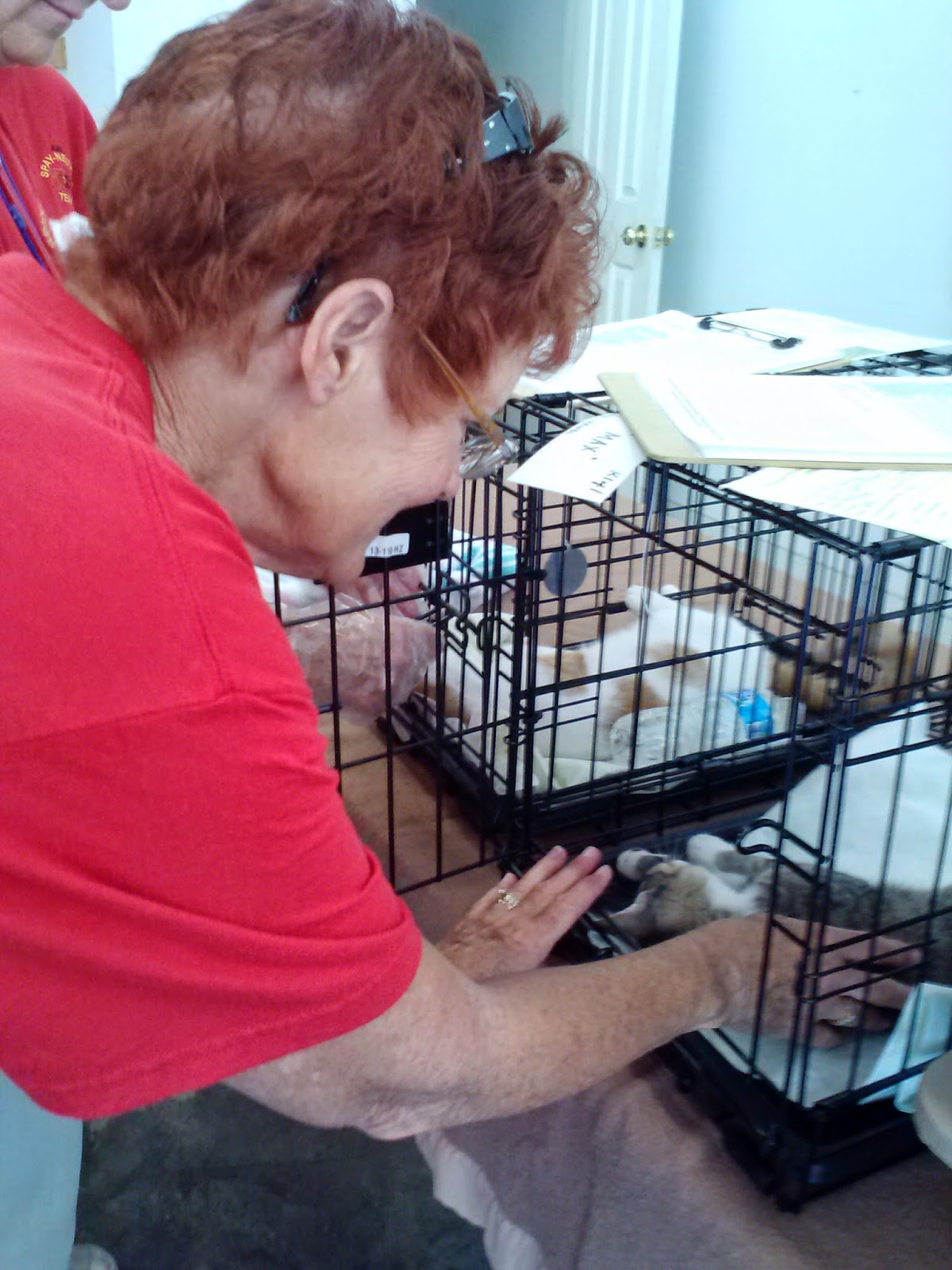
Good Samaritans stay one-on-one with animals as they begin to recover from surgery, talking to them, stroking them, reassuring them.  Owners who arrive early are allowed in the recovery area to comfort their animal family member.  Volunteers give pedicures to sleeping animals who need them, check them for fleas and ticks.

Nurses and a retired vet check every animal and stay close to those having cardiac or breathing problems.  Experienced volunteers massage and talk to animals having difficulty awakening.

Owners receive education and counseling as they arrive to claim their dogs and cats.  They receive gifts of food and other pet supplies.  They thank the volunteers over and over.  “You don’t know how important this clinic is,” they say as they gather their beloved animal companion to head home.  "You don't know how much this community needs you. You make such a difference in our lives.  We don't know what we'd do without your help. We don't know what our animals would do." 


Saturday, September 13, 2014

Spay and Neuter Clinic Tales: Who, What, Where, How, and Why


Spay and Neuter Clinic Tales: Who, What, Where, How, and Why

Hot Springs Village Animal Welfare League doesn’t need to provide spay and neuter services for Hot Springs Villagers.  The Village is a gated community of retired middle-class people (mean income $51,502) who pamper their companion animals. 

When Villagers die or must move into nursing homes, The League steps in to help rehome beloved animal companions.  The League provides world-class care for animals who wander into the village as strays or are dumped off here in the middle of the night, sometimes injured or ill, and that happens more than you might think.  The League manages a no-kill shelter with six runs, a beautiful play yard, and plenty of volunteers.  A strong foster program is a mainstay of The League, and the foster families helped The League adopt out 301 animals in 2013. 

What makes The League unique is that they focus on providing spay and neuter (S/N) mobile clinics for their good but poverty-stricken (approximately $13,000/year) neighbors who live in rural areas surrounding The Village.  These good people rescue stray and abandoned animals, but they cannot afford to take the animals to veterinarians to have them spayed and neutered.  The people pay the clinic what they can afford, but they can’t afford much.

Let me say that again: The League does not provide S/N clinics for The Village; they provide desperately-needed services for their non-Village neighbors who cannot afford to spay and neuter their rescued cats and dogs.

Yesterday I drove around one of the stunningly-poor unincorporated towns where a two-day clinic would begin today at the fire station.  The town isn’t even on the census.  The world has forgotten it.  Even the stop signs are faded to white.


As I drove through the run-down, unpainted houses and the trailers with tape across the cracked windows, I waved to people sitting on their porches. A lot of people were sitting on their porches because nobody can afford air conditioners.  The 90 degree heat outside was cooler than the 110 degree heat inside.  But despite the oppressing heat, everyone I waved to waved back. 

Many of the dogs in this hamlet live in desperate situations. My heart broke when I saw this heavy-coated husky mix chained to a tree with only rocks and dirt for comfort.  Panting, he had plastered himself against the side of his owner’s mobile home trying to feel the little coolness that might remain in the corrugated tin.  Today the heat will get to 90.  He probably won’t die, but he might wish he could.  When I saw the BEWARE OF THE DOG sign on the tree to which he was chained, I started to cry.  The sign should have said BEWARE OF PEOPLE. 


But most of these desperately poor people love their dogs and cats and want to take good care of them.  I passed a young woman who was carrying a small Sheltie, pushing her baby in a carriage, leading a Westie, and ushering along her other two little girls.  I stopped and asked whether she was headed to the clinic.  She said she was.  I asked whether I could take her picture.  She said I could. 
 

I explained that since Bob Barker died and the board closed his foundation, we had lost a significant part of our S/N funding, and I was trying to write grants to help continue the clinics.  She said, “Thank you so much. I can’t afford to take these dogs to the vet.  I rescued them this week from a lady who had rescued them from a puppy mill.  They stunk and were covered in ticks that took me all evening to pick off after I bathed them.  So now I have to get them fixed so they don’t have any more babies.  I think this one’s already pregnant,” she said, nodding at the one she was carrying.


Then she said, “I don’t know what would happen to the dogs here if you had to stop doing this clinic.  Thank you so much.  It’s really important.  We need so much help… You don’t even know…” 

She’s the kind of good folks that The League is trying to help.  But we need money to carry on the work.

After I left her walking down the road, I went to the clinic to see what I could see.  The dogs were all ages and sizes, from a big, grown blue-eyed husky, to a nervous adult Chihuahua, to a frightened puppy, to a rambunctious bunch of year-old mixes of all colors and coats with one blue and one brown eye.  I figured the husky was the source of all those youngsters and countless more.


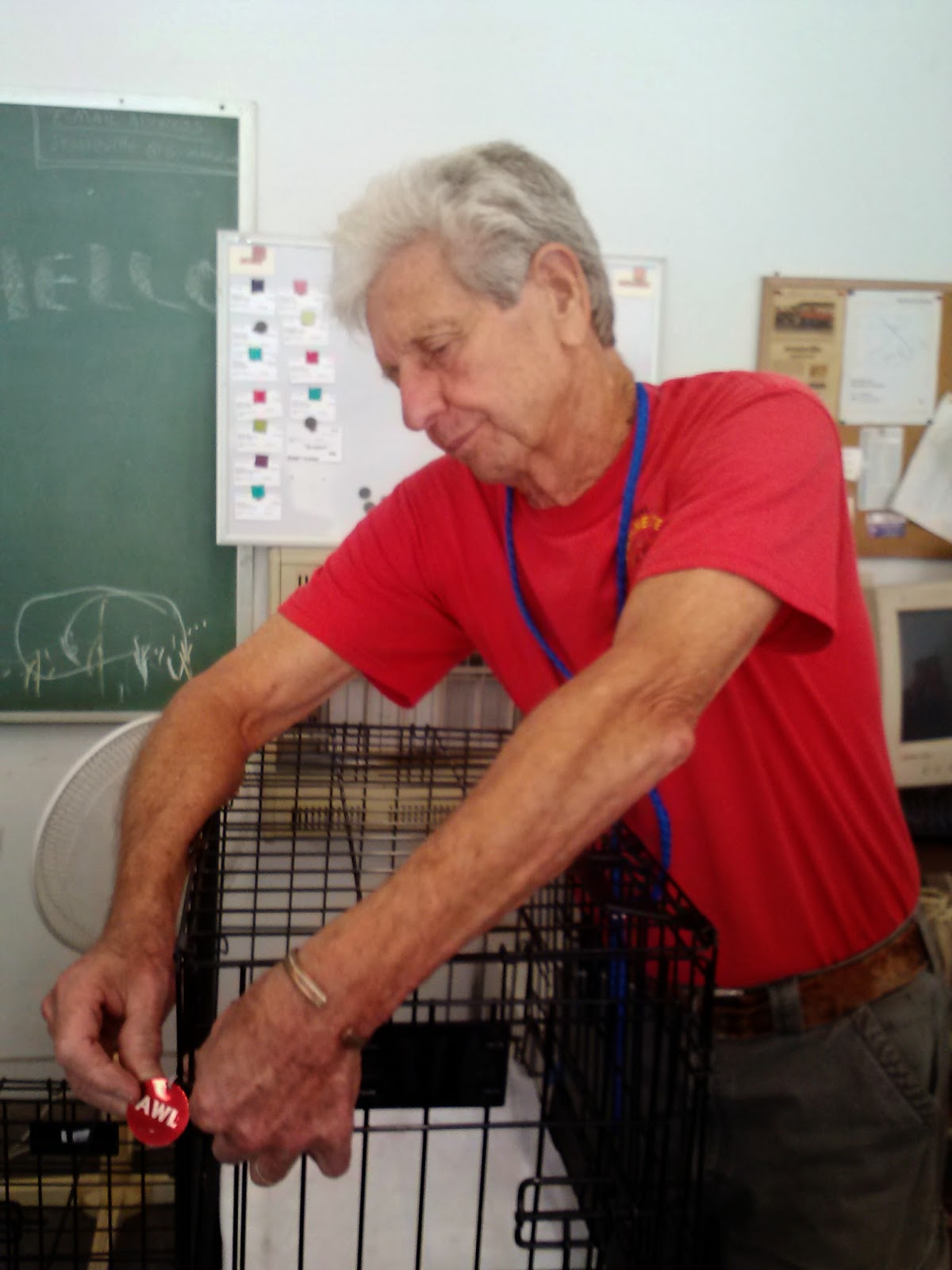
My heart filled with pride as I watched our President Mary, a former nurse, listen to an unconscious kitty’s heartbeat; our Spay and Neuter Coordinator, Angela, comfort a kitty who was trying to awaken from the anesthesia; and a man I never saw before tag a cage for the next patient.


These wonderful people (and 96 more) could have been home savoring a second cup of coffee over a good book, playing a round of golf, or sleeping in.  Instead, they were helping animals in need.  Not their own animals, but the animals of a community who lacked the money- and often education- to take care of the needs of its own dear dogs and cats.

But volunteers can’t pick up scalpels and operate on dogs and cats.  They can’t perform spay and neuter surgeries.  For that we need vets, mobile clinics who will come to these poverty-ridden locations and provide the services that the animals so desperately need.  For that, The League needs money: $5000 for each two-day spay and neuter clinic so young ladies who try to rescue neglected dogs can walk down the road to get help for them.  So big blue-eyed huskies can stop multiplying endlessly.  So maybe, just maybe, dogs chained to trees in the searing heat under signs that scream BEWARE OF THE DOG will become only a distant memory.


Thursday, September 11, 2014

Spay and Neuter Clinic Tales: Good Neighbors


Spay and Neuter Clinic Tales: Good Neighbors

I thought Maggie was Tom’s mother when they came in to the clinic together.  Tom’s two dogs were out of surgery and in recovery, so I asked Maggie if I could talk to her while Tom completed the release forms. 

“You’re his mom?” I asked, certain that she was.

“Oh, no!” she said, “I’m just his neighbor.”

“How did you happen to come here with him today?”

“I brought one of my cats in yesterday and told Tom that he needed to bring his dogs today.  I told him that you’d help him.  He came right down and you gave him a voucher for today.”

I asked Maggie to tell me about her cat.  “I’m a cat person,” she said, “So when I heard a sound from under the hood of my car this spring, I knew what it was.  I opened the hood, and there the little thing was, curled up on the engine.”  Then she added, “I’ve been waiting ever since for your clinic so I could get her fixed like my other two cats.  I gave you my ten dollars.  Then I gave you another ten dollars to fix my down-the-street-neighbor-Alice’s cat.  I told Alice that she needed to get her cat fixed, and she said she couldn’t afford to.  So I told her to come here and I’d pay the ten dollars.  So she did, and I did.”

I asked Maggie about Alice’s cat.  She said, “People moved away and left it.  So Alice started feeding it, and now it’s hers.”  Then she added, “You gotta keep cats here inside.  People will kill ‘em.  Big dogs run loose and will kill ‘em, but people will kill ‘em, too.”

I asked Maggie about Tom’s two dogs.  “Tom’s out of work, so he rented a room from my neighbor girl.  She works two jobs and rents out bedrooms to make ends meet.  She works real hard.  The woman who rented out her other bedroom just moved out a month ago and left her two dogs, a male and a female.  Never came back for ‘em.  Tom started taking care of ‘em.”

“Wow,” I said.  “Sounds like a lot of people around here move off and leave their animals.” 

“They do,” she said.  Then she added, “Most of the neighbors are good people who try to take care of animals.  But some are bad people.  There’s some bad people here.  Drugs and illegal substances.  And they let their dogs run loose.  And they kill cats.  They don’t like cats.  They killed my cat Sally this year.  I think it was teenagers.”

I asked her about Tom.  She said, “He’s been out of work for a long time.  But he’s a good person and works hard.  He tries to help everyone in the neighborhood.  He’ll do anything to help anybody.  People are really poor here, but we all try to help each other.”

I asked her what the clinic meant to her, told her that I was writing a grant to try to keep it going because we’d lost our Bob Barker funding.  First she looked alarmed and said, “I already gave my ten dollars, and then ten more for Alice!  I’m on disability.  I can’t give any more!”

I assured her that I didn’t want her money.  I explained that I was writing grants for places like the ASPCA and Best Friends.  Then she said, “Maybe I could help you.  Let me give you my phone number.  I’ll do anything I can to help.”

I told her that what I needed her to do was tell me if the clinic had made a difference in the community, and how she knew if it did.  She said, “I used to see seven, eight stray dogs every week.  Now I hardly ever see a stray.  Dogs run loose, but you know who every dog belongs to.  We don’t have strays any more since you started these clinics.  Your clinics make a difference.  They make a BIG difference.   The people here need ‘em.  You’ve got to get the money to keep ‘em going.  I’ll help you any way I can.  Just call me.”  She reached out for my notepad and wrote down her name and phone number.  “Just you call me,” she said.  “I’ll do anything I can to help.  Just you call me, and I’ll help.”

Thanks, Maggie.  You’ve already helped than you’ll ever know.